

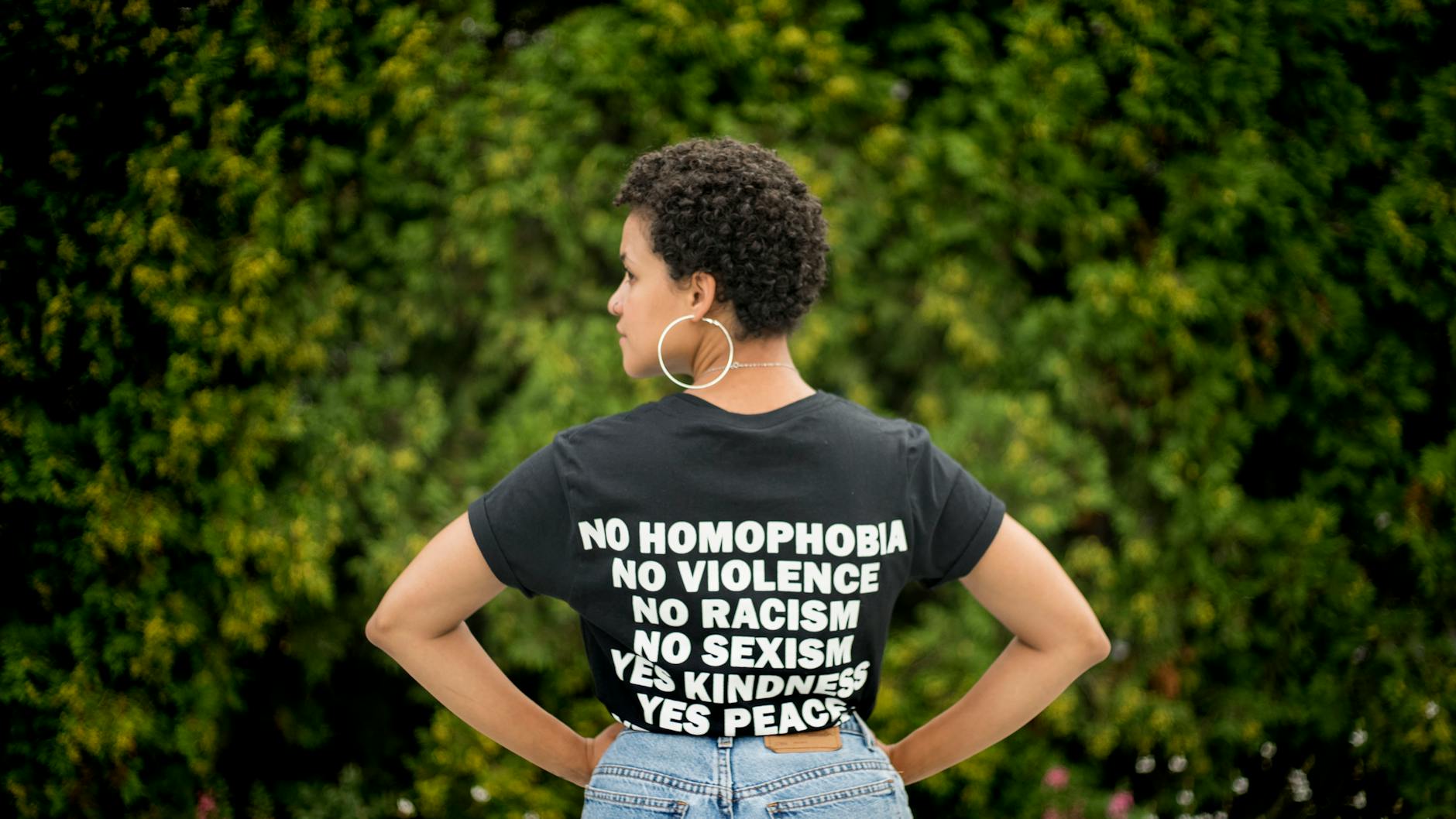
The phrase protecting your peace has never felt more urgent than it does right now. These past weeks, the headlines have been relentless—political violence, wars, suffering, and nonstop commentary telling us not just what happened but how we should feel about it.
I’ll be real with you. I’ve consumed more news in these past few weeks than I have in years. And it pulled me into a darkness I didn’t see coming. I felt it in my chest, in my mood, in the way my energy sank low. It wasn’t just the events themselves—it was the doublespeak, the gaslighting, and the constant push to dictate perspective. That’s when I knew I had to turn it off.
But here’s the thing: turning it off doesn’t mean I’m closing myself off to what’s going on in the world or that I don’t care. It means I care more about my mind, my spirit, and my sanity. And I know I’m not the only one asking—how do I stay informed without drowning in the chaos? How do I balance awareness with guarding my spirit?
The Emotional Toll of the Times
News today isn’t simply about informing—it’s about shaping perception. Every word, every camera angle, every choice of headline carries weight. Some outlets do it more aggressively than others, but none of them are neutral.
And our bodies feel it. Psychologists call it negativity bias: our brains cling to bad news because it once helped us survive. But in the modern world, that survival instinct gets hijacked. Watching violence on a loop tells your nervous system you’re in danger, even when you’re safe at home. Cortisol spikes. Anxiety builds. Before you know it, you’re carrying the weight of a world you can’t control.
That weight is heavy enough. But for Black people, there’s another layer.
Echo of the Past
History has a way of repeating itself in spirit, if not in form. In the past, enslaved people during American chattel slavery were forced to smile for their oppressors. They had to sing through heartbreak, show gratitude where there was none, and display empathy for those who owned their bodies. Their feelings weren’t their own—they were dictated, policed, and punished.
When I see today’s news cycle, I can’t help but notice a mirror. Political violence toward anyone is wrong—period. But then comes the pressure: “This is how you must feel about the person.” And I think, hold up. I am free to feel how I feel. That’s part of my humanity. That’s part of my liberation.
Guarding your spirit means honoring your truth, even when the world tries to gaslight you into performing empathy or silence.
The Trap of Helplessness
Another layer to all this is the helplessness. Watching global crises unfold leaves you wanting to do something, anything. But the problems feel so big, the distance so wide, that despair sets in.
Here’s the truth: helplessness is the design. The system wants us stuck—overwhelmed by information, exhausted by outrage, numbed by repetition. Because a weary public is easier to control.
But you don’t have to play that game. Preserving your wholeness is your rebellion. It says: I see what’s happening, but I won’t let it steal my spirit. I won’t let it define how I show up in my life or community.
Freedom of Speech Under Pressure
Freedom of speech has become a slippery phrase. In theory, it means we all get to speak and feel without punishment. In practice, it feels conditional. If your perspective challenges the script of those in power, you’re silenced, shamed, or branded as dangerous.
That isn’t freedom—that’s control. And it’s why so many of us feel like we’re back in a psychological plantation, where certain feelings and truths are forbidden.
When the news cycle tells you how to interpret events, when social media punishes you for not grieving “the right way,” that’s an infringement on freedom of speech and freedom of thought. And it chips away at your peace because it creates a war inside: Do I say what I feel or do I stay quiet?
Protecting your peace means reclaiming that freedom within yourself. You may not control how others react, but you control whether you silence your own truth—and in keeping your truth alive, you exercise the very freedom of speech that generations before us were denied.
Practical Ways to Protect Your Peace While Staying Informed
I don’t write this as theory—I write it as someone who has sat in front of the TV in anger and disbelief, heart heavy, wondering why I kept pressing “play” on pain. These are the practices I lean on. Maybe some—or all—can help you too. They’ve become my way of keeping my mind steady in a world designed to rattle it.
1. Set Time Limits
I had to stop letting the news run my day like background noise. Now I choose windows. For me, it’s usually in the morning with tea. Not every day—only when I feel grounded enough to handle it. Try experimenting with your own limits. You’ll be surprised how much lighter you feel when the news isn’t running nonstop in your home.
2. Choose Quality Over Quantity
I don’t hop from channel to channel anymore. Too many voices pulling me in different directions only breeds confusion. Instead, I pick one or two outlets I can tolerate. That’s it. No doomscrolling. No endless commentary. Just enough to understand the essentials. You might find that cutting down on “sources” actually increases your clarity.
3. Balance the Narrative
When I consume heavy news, I intentionally seek something uplifting to balance it out. It might be a story about a local community garden, or even just scrolling a page full of cat videos. It sounds small, but it matters. Protecting your peace means refusing to let despair dominate the stage. Try making it a habit: if you take in something heavy, feed yourself something light right after.
4. Listen to Your Body
My body tells on me. Shoulders tight. Jaw clenched. Breathing shallow. That’s when I know it’s time to shut it down. No story is worth carrying that kind of stress in my body. Tune into your cues. Your body is wise—it will tell you when enough is enough.
5. Curate Social Media
I used to keep accounts on my feed just because I knew them personally, even though their constant rants left me drained. Now? Unfollow, mute, or block. My peace is more important than keeping up appearances. I treat my social media like my home—only people and energy I’d invite through the door get to stay.
6. Anchor in Ritual
When I’ve taken in too much, I return to ritual. Lighting incense. Brewing tea. Journaling out my feelings. For you, it might be prayer, meditation, or a simple walk in silence. Ritual helps you remember: you are not the chaos, you are the calm.
7. Take Local Action
Helplessness shrinks me. But when I donate to a local shelter, share resources, or volunteer, I feel my agency return. I may not be able to solve global crises, but I can shift energy where I live. Protecting your peace sometimes looks like turning helplessness into a small, tangible act of love.
8. Protect Conversations
I’ve learned to say, “Not today,” when a friend or family member wants to rehash a painful story I’m already saturated with. That’s not avoidance—it’s a boundary. Guarding your spirit means protecting your ears and spirit, even from people you love.
9. Reconnect With Nature
There’s something about stepping outside, barefoot on the ground or walking under trees, that resets me instantly. Nature reminds me the world is bigger than the chaos on screen. Even if all you can manage is ten minutes on your porch, it makes a difference.
10. Lean on Community
When I feel the heaviness lingering, I call a trusted friend or check in with my therapist. I don’t have to carry it all alone. Neither do you. Sharing your truth lightens the load and reminds you you’re not the only one trying to make sense of this world.
11. Lean on Spiritual Wisdom
Across traditions, the guidance is the same: guard your mind, protect your heart. Proverbs tells us everything flows from the heart. Buddhism speaks of right thought and right speech. Metaphysical wisdom reminds us energy flows where attention goes.
Protecting your peace is spiritual hygiene. Just as you wash your hands to stay healthy, you must wash your mind of unsettling information to stay whole.
You can acknowledge chaos and suffering without drowning in it. You can care without being consumed.
Do Your Inner Work
Protecting your peace isn’t just about external boundaries. It’s about the soul work of reclaiming your right to feel, to think, and to choose how you show up.
Ask yourself:
- Do I believe I must consume everything to prove I care?
- Do I feel guilty stepping away?
- Do I silence my truth because I’m afraid of judgment?
Exercise:
The next time you feel weighed down after watching the news, pause. Place your hand over your heart. Take three slow breaths and say aloud: “This is not mine to carry.” Repeat until your body softens.
Journal Prompt:
When I feel overwhelmed by the news, what fears or responsibilities am I carrying that don’t belong to me? Where have I silenced myself to fit the script—and how can I reclaim my right to speak and feel freely?
Affirmation:
I honor my empathy while protecting my peace. I can care deeply without carrying the weight of the world.
Final Thoughts
In a chaotic political climate, protecting your peace is more than survival—it’s about reclaiming your birthright to wholeness, to freedom, to being fully human in a world that profits from your exhaustion. For me, these practices aren’t just habits. They’re acts of resistance. Each time I turn off the TV, set a boundary, or step outside into the quiet of nature, I’m refusing to let a system designed to overwhelm me win.
Especially as a Black woman, I know this work runs deeper. Our ancestors didn’t have the freedom to feel what they felt. They were told when to sing, when to cry, and when to hold their tongues. Today, when I keep my mind steady, I honor them by exercising the freedom they were denied. It’s not just about lowering my stress—it’s about saying, It’s not just about lowering my stress—it’s about declaring: I will not hand over my mind or my emotions to forces that seek to discourage and suck the life out of me.
And that’s what I want you to hear most clearly: protecting your peace is not selfish. It’s sacred. It’s a statement that your spirit matters, that your voice matters, that your inner freedom is not up for negotiation.
The news will keep spinning. Crises will come and go. But you have the power to decide what you let into your heart. Choose balance, boundaries, and peace—not just for you, but for the generations who watch how you move and learn from your example.
Because when you protect your peace, you don’t just survive the noise—you rise above it. And every time you choose peace on your own terms, you’re exercising true freedom: the freedom to feel, to speak, and to be fully yourself.
Key Takeaways
- Protecting your peace matters more than constant updates.
- Limit your news intake with clear boundaries.
- Balance heavy headlines with hope and positivity.
- Listen to your body and unplug when overwhelmed.
- Rituals, nature, and community restore your center.
- Small, local actions ease helplessness.
- Do your inner work—release what isn’t yours to carry.
- Freedom of speech includes freedom of feeling—don’t surrender that.

Share your thoughts…respectfully of course.