

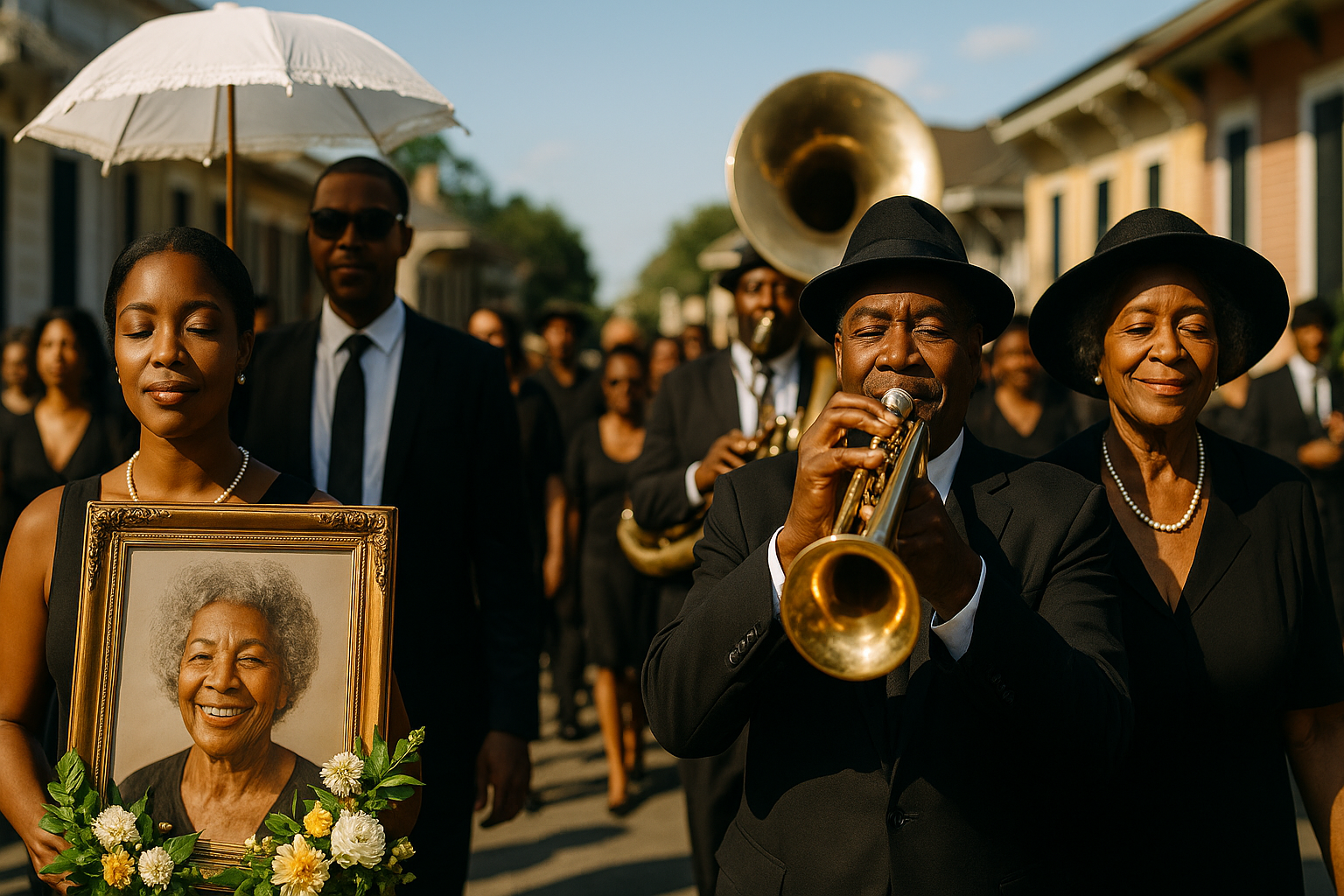
Lately, I’ve been feeling the weight of a quiet shift. The elders I grew up with—those steady voices, unforgettable personas, and deeply familiar faces—are beginning to transition. Some after long, full lives. Others more suddenly, leaving behind an ache that ripples through our memories and reminds me just how important it is to honor our elders while their here and after passing.
And while I mourn their passing and feel deeply for the children, grandchildren, nieces, nephews, and partners they leave behind, I also hold a personal truth that brings me peace: I believe they are becoming something more. Something sacred.
To me, they are not just gone. They’ve returned to spirit. They’re becoming ancestors.
I know that may not be how everyone sees it. Grief is complicated, and for many, it’s hard to imagine someone’s presence without their body. I honor that. I don’t offer this belief as an answer, but as a way of seeing—a way that brings me comfort and clarity during times when loss feels heavy. This way of seeing helped me move through my younger brother’s transition in 2021 and continues to comfort me to this day.
Because for me, death isn’t the end of someone’s story. It’s a shift in how they show up. And I want to talk about that shift with reverence, with empathy, and with the deepest respect for all who are navigating this tender path.
The Sacred Privilege of Growing Old
In a world where Black and Indigenous bodies are often not allowed the dignity of aging, living a long life is not just a blessing—it’s a radical, spiritual accomplishment.
History has shown us the cruelty of stolen lifespans. From the brutalities of chattel slavery to the ongoing violence of systemic racism and poor healthcare access, many in our communities don’t get the chance to see their gray hairs grow in peace.
So, when our elders do live long, when they sit in their favorite chairs telling stories, when they walk slow with a cane and wisdom in their stride—we are witnessing survival, grace, and divine protection. As Psalm 91:16 says: “With long life will I satisfy them and show them my salvation.”
To grow old is not a burden. It is a crown. And those who wear it carry something sacred: experience, insight, and an elevated view of life.
Elders as Living Libraries: The Keepers of Culture
African Diaspora
In African societies, griots were the oral historians—keepers of stories, genealogies, and songs—tasked with preserving a people’s memory across generations. Among Black Americans, many of our elders carry that same sacred role, often without a title or ceremony, but with just as much power and purpose.
They are our griots, our walking encyclopedias, our sacred archives.
They carry:
- The stories not found in textbooks—truths about migrations, marriages, survival, and resilience.
- The recipes passed down not by measurement, but by feel and memory.
- The real histories of what our families endured and overcame.
- The spiritual practices and old remedies that kept us rooted when the world felt unstable.
Indigenous Americas
In Indigenous cultures across the Americas and beyond, elders are also revered as the spiritual and cultural heart of the community. They’re considered wisdom-keepers—those who carry ancestral teachings, earth knowledge, ceremony, and the responsibility of passing it forward.
They guide not just with words, but with presence. They teach by how they walk in the world—rooted in land, rhythm, and relationship.
In many Indigenous nations, youth are taught to sit with elders, to listen, to receive. Not just information, but a transmission—a remembering. This is how songs are preserved. How sacred sites are respected. How names, lineages, and original instructions are kept alive.
And when colonization, boarding schools, and displacement tried to erase these truths, it was the elders who held the knowledge in secret—passing it on in whispers, gardens, lullabies, and prayer.
When we lose an elder, we don’t just lose a person. We lose a library of lived experience. A sacred bridge between generations. But if we’ve listened closely—if we’ve asked questions, shared space, and honored their time—we become the next keepers of the flame.
And in doing so, the story doesn’t end. It continues—through us.
From Earth to Spirit: The Sacred Role of Ancestors
African Diaspora
Across the African diaspora, death has never meant disappearance.
Yoruba tradition honor the Egungun, ancestral spirits who return to guide and protect the living. In Haitian Vodou, the lwa include ancestors who act as intermediaries between the human and spiritual realms. In Hoodoo and rootwork traditions practiced throughout the American South, it’s common to set out a glass of water, light a candle, or speak directly to the ancestors during prayer—acknowledging their continued presence and partnership in life.
Christianity
Even Christianity echoes this truth. The “great cloud of witnesses” mentioned in Hebrews 12:1 reminds us that those who came before us are still surrounding us, still cheering us on from beyond the veil. Many Black church traditions have long practiced this in their own way—honoring the “mothers of the church,” calling on “those who came before,” and singing songs that reach toward glory, not just as a destination, but a reunion.
Indigenous Americas
In Indigenous traditions across the Americas, ancestors are not “past tense”—they are alive in the land, the waters, the stars, and the wind. Many tribes teach that we walk in relation not only with the people around us, but with those who have walked before. Ancestors are invoked in ceremony, spoken to in dreams, honored through seasonal rituals, and remembered as part of the great circle of life that includes the seen and unseen.
They are not far away. They are close.
And for Indigenous peoples whose ceremonies were forcibly banned, who were displaced from ancestral lands and cut off from burial grounds—carrying the memory of the departed became an act of resistance. Ancestor reverence is not just spiritual; it is political. It is a way of saying, “We remember. We remain. We are not alone.”
Whether through libations poured into the soil, psalms sung in a small country church, or sage burned in remembrance—these traditions all point to the same sacred truth:
When an elder transitions, they don’t leave us. They ascend, shift.
They become something greater—guides, guardians, companions in spirit.
You might sense them in dreams. Hear them in a phrase you thought you forgot. Their favorite song plays on the radio. Smell their perfume on the wind. Or simply feel them near during moments of stillness.
You are not imagining it.
You are being loved from beyond.
Grieving with Reverence: Rituals of Connection
Grief is deeply personal. It doesn’t follow a script, and it doesn’t care about timelines. Some days, it’s a quiet ache. Other days, it knocks the wind out of you. But amid that sacred mess, rituals can give our sorrow structure—something to hold on to when the world feels like it’s spinning.
When a member of my family passes, my intuition pulls me to write their name on a candle, dress it with oil and herbs, light it, and pray at my ancestor altar. I wish them well on their journey, speak their name aloud, and send love as they transition. It’s my way of acknowledging their spirit, of making room for them in the realm of memory and energy.
In many cultural ancestor reverence traditions, candles are often used as both light and language. Writing a name on a candle is a form of spiritual communication. Lighting it is a way to guide the spirit with warmth and intention, letting them know they are seen, honored, and not alone in crossing over. Flame symbolizes the soul’s continuation and serves as a beacon between worlds.
These rituals—both formal and personal—bridge the space between grief and grace. They remind us that even though someone’s physical body is gone, their spirit is still in motion. Still finding its place. And we can help light the way.
More Ways to Honor Elders After Passing
Here are more ways people across cultures stay connected through ritual:
- Libation ceremonies – Pouring water or drink onto the earth while speaking names and prayers of remembrance.
- Ancestral altars – Adorning a sacred space with photos, candles, offerings of food, flowers, or items the person loved.
- Memorial meals – Cooking and eating their favorite dish on special days, telling stories while gathered around the table.
- Letters to the departed – Journaling to them, expressing thoughts, gratitude, or even unresolved emotions.
Whether rooted in tradition or created from intuition, these small acts matter. They give our grief a place to land. They remind us that honoring someone doesn’t have to wait for a funeral or anniversary. It can happen quietly, every day, in your own sacred way.
This is ancestor reverence and veneration, where we acknowledge and honor them, not worship them. And in that honoring, something powerful happens—your heart begins to heal, and your connection with them deepens, even across the veil.
Across Beliefs, One Truth: The Spirit Remains
Whether you call it the spirit realm, Heaven, eternal life, or ancestral energy—most belief systems agree: death is not the end.
Some of us were raised in church pews, taught to believe in streets of gold and eternal rest. Others were raised with altars, incense, and the understanding that our people walk with us, unseen but active. Still others simply feel something when a favorite song plays unexpectedly or a familiar scent lingers in the air.
None of these paths cancel the others. They converge on the same truth: the body may rest, but the soul continues.
Even secular psychology supports this. Carl Jung called it the “collective unconscious”—a deep well of ancestral memory that informs who we are. Modern science, too, now recognizes the epigenetic impact of generational trauma and wisdom.
So no matter your path—Christian, spiritual, agnostic—honoring the elders who’ve passed is about more than belief. It’s about memory. Energy. Connection. Continuity.
We Are the Legacy: Living What They Taught Us
Legacy isn’t about fame, fortune, or fanfare. It’s not measured by how many people knew their name, but by how deeply they impacted the ones who did. Legacy is personal. It’s spiritual. It’s how someone’s essence lives on through us—in gestures, habits, sayings, and love.
Legacy is your grandfather’s laugh echoing in your brother’s voice.
It’s your auntie’s spirit showing up in the way you comfort a crying child.
It’s the garden she planted still blooming.
The pot of greens simmering just the way he liked them.
The way you stand in a room—with dignity, humor, or fire—because they showed you how.
Every time we choose love over fear, compassion over pride, courage over silence, we’re extending their legacy. Not just preserving it—living it.
And when a matriarch or patriarch transitions, the family often feels untethered. The glue is gone. The gatherings change. The rhythm stumbles.
But sometimes, that’s because the baton has been passed. Quietly. Spiritually. You may now be the one being called to hold the stories. To remember the prayers, send the texts. To keep the flame.
Not to replace them. Not to become them. But to carry forward the spirit of what they stood for—in your own way.
You don’t need to have it all figured out.
You just need to be present.
To show up with the same heart they poured into you.
To be the bridge.
Because legacy isn’t just what they left behind. It’s what we choose to build from it.
Final Thoughts: Love That Transcends Time
Grief means you loved deeply. And that love doesn’t need to end when someone’s body gives out. They are still with you. In the dreams that comfort you and the intuition that guides you. In the warmth that wraps around your shoulders when no one else is in the room.
Speak their name. Keep their stories alive. Pass down their wisdom. Mourn, yes—but also celebrate.
Because they lived. They mattered. They endured.
And now, they live through you.
They are your roots.
You are their bloom.
And the story continues.
Let their memory inspire how you live. And let your life, one day, inspire those who will speak your name in love.

Share your thoughts…respectfully of course.